
Rabby Extension Download and Gas Optimization: What DeFi Users Should Actually Know
A common misconception is that downloading a different wallet extension automatically makes every DeFi transaction cheaper. It does not. A browser wallet can improve how a transaction is understood, simulated, and configured, but the final network fee is still shaped by the blockchain, the transaction’s computational demands, and market demand for block space. Rabby is useful precisely because it brings those variables closer to the user’s decision rather than hiding them behind a single confirmation button.
For US-based DeFi users, the practical question is therefore not simply whether to install the Rabby wallet extension. It is how to use a wallet interface without confusing wallet-level assistance with protocol-level savings. The distinction matters when swapping tokens, supplying collateral, bridging assets, signing approvals, or interacting with unfamiliar contracts. A better mental model is that Rabby can help reduce avoidable mistakes and improve transaction preparation; it cannot repeal gas mechanics.
What the Rabby Extension Can—and Cannot—Optimize
Gas is the fee paid for computation and data usage on a blockchain. On networks using a gas-market model, users typically specify how much they are willing to pay for execution, while the network determines the fee required for timely inclusion. A simple token transfer usually consumes less gas than a multi-step decentralized exchange transaction, and a lending action involving collateral, approvals, and several contract calls can consume substantially more. The wallet does not control the underlying amount of work.
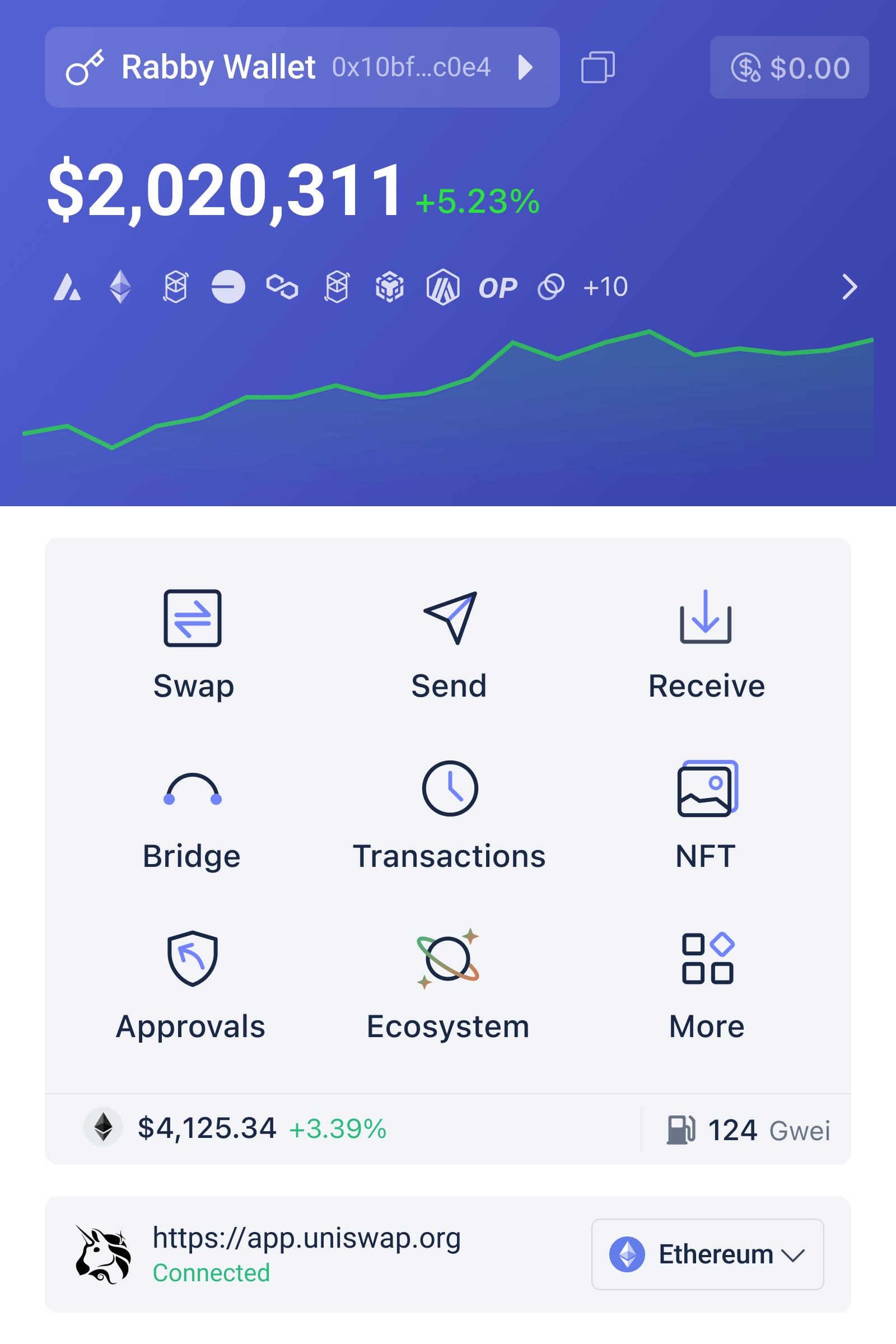
Rabby’s value lies in the layer before signing. A well-designed wallet can present the destination contract, token changes, estimated network fee, and possible warnings in a more intelligible way. It may also simulate an interaction so the user can inspect an expected outcome before broadcasting it. That is not the same as guaranteed prediction: simulations depend on current state, available RPC data, and the assumptions of the software. Still, better visibility can prevent a failed transaction, an accidental approval, or a poorly timed submission—events that create costs without producing the intended result.
This leads to an important distinction between gas reduction and gas efficiency. Gas reduction means paying less for the same operation, perhaps because network congestion has eased or because a cheaper route is available. Gas efficiency means accomplishing a useful objective with fewer unnecessary actions. A wallet can support the second goal by making approval requirements, contract interactions, and transaction outcomes easier to inspect. It cannot guarantee the first, especially when the network itself is busy.
Users who want to install the extension should begin with the project’s official distribution channel and verify that the browser listing, publisher information, and requested permissions look consistent. A search result or social-media post can lead to a malicious imitation. For readers checking the installation path, this rabby wallet download resource can serve as a starting point, but the sensible security practice is to cross-check the destination before entering a seed phrase or importing an account.
Installation Is a Security Decision, Not a Routine Download
Installing a wallet extension creates a privileged interface between a browser and blockchain applications. The extension may be asked to connect to sites, display account information, request signatures, and submit transactions. Those capabilities are necessary for normal DeFi use, but they also mean that the installation process deserves the same care as setting up a financial application. A genuine wallet will never need a user’s recovery phrase merely to unlock a newly installed extension from an official store listing.
A safer setup process is deliberately unhurried. Download the extension from a source you have independently verified, create or import the wallet only when you understand the recovery process, store the seed phrase offline, and use a hardware wallet for larger balances when appropriate. After installation, test with a small amount and confirm that the selected network, account, and recipient address are correct. The objective is not to eliminate every risk; it is to reduce the number of irreversible decisions made under uncertainty.
Recent information shown in the Chrome Web Store is also relevant to how users assess an extension. On September 1, 2026, Rabby Wallet’s listing disclosed information concerning data collection and use and directed readers to the developer’s privacy policy for more detail. That disclosure is not proof that an extension is risk-free, nor does it answer every privacy question. It does, however, remind users that wallet selection includes a data-governance dimension: permissions, telemetry, browser exposure, and the handling of connected-site information all deserve review alongside transaction features.
Comparing Gas Strategies and Wallet Choices
There are several ways to approach gas management, and each sacrifices something. The first is manual control: an experienced user can adjust fee parameters, wait for quieter periods, or select a different network. This offers flexibility but increases the chance of setting an unsuitable fee or misunderstanding how a transaction will be prioritized. Manual control is most appropriate when the user understands the network’s fee model and is willing to monitor the transaction after submission.
The second approach is an automated wallet estimate. This is convenient and often suitable for ordinary swaps or transfers, because the wallet can use current network information to suggest a fee. Convenience comes at the cost of opacity. An estimate is not a promise of confirmation time, and rapidly changing demand can make a recommendation stale. A user who needs a transaction to settle before a liquidation threshold or market event should not treat a default estimate as a guarantee.
The third approach is changing the execution path: using a lower-cost network, batching actions where a protocol supports it, or choosing a route with fewer contract calls. This can reduce the total fee, but it introduces trade-offs involving liquidity, bridge risk, asset availability, and smart-contract exposure. A cheaper transaction on an unfamiliar bridge is not automatically a better transaction. Cost must be evaluated together with settlement assumptions and the consequences of failure.
Rabby fits between these approaches. It can make the transaction legible enough for users to decide whether to proceed, wait, revise the route, or reject the request. That is a meaningful advantage for DeFi, where the visible action—such as clicking “swap”—may conceal token approvals, router contracts, slippage settings, and multiple state changes. Yet users should resist the common marketing interpretation that a wallet interface is itself a gas optimizer. The wallet can improve judgment; the protocol and network still determine the work.
A Practical Framework for Lower-Cost, Lower-Risk Transactions
Before confirming a transaction, ask four questions. First, what exact outcome am I trying to achieve? Second, how many contract interactions are required, and can any be avoided? Third, is the current network fee reasonable relative to the value and urgency of the action? Fourth, what happens if the transaction fails or the market moves while it is pending? These questions are more reusable than memorizing a single setting because they apply across swaps, lending, staking, and bridging.
Approvals deserve special attention. A token approval authorizes a contract to spend a specified amount, and approval transactions consume gas even though they may not move the asset immediately. Unlimited approvals can reduce repeated prompts, but they expand the potential damage if a contract or interface is compromised. A limited approval may cost more in future interactions while reducing authorization scope. The economically cheapest choice is therefore not always the safest choice, particularly for accounts holding meaningful balances.
Transaction simulation is helpful but bounded. A simulation can reflect the contract state available at the time of checking, while the state may change before a transaction is mined. Prices can move, liquidity can disappear, and a lending position can cross a risk threshold. A successful simulation does not establish that the transaction will be profitable, safe, or executable later. It is evidence about a scenario, not a guarantee about the future block.
For this reason, a sensible operating pattern is to separate routine and high-consequence activity. Use a smaller, compartmentalized wallet for experimentation and unfamiliar applications. Keep long-term holdings away from frequent browser interactions when possible. Review the network and account before signing, inspect token changes rather than only the requested function, and reject prompts that are inconsistent with the action you intended. These habits usually save more money than chasing tiny differences in fee settings.
What to Watch as Wallets Evolve
The next meaningful improvements in wallet design are likely to be measured less by a single “lowest gas” claim and more by the quality of decision support. Useful signals include clearer transaction simulation, better explanation of contract permissions, more reliable fee estimates, and stronger separation between account management and routine browsing. If these tools become more accurate and transparent, users may make fewer failed transactions and avoid more harmful approvals. That is a conditional opportunity, not a guaranteed outcome: better interfaces can also encourage overconfidence if warnings are treated as infallible.
The durable lesson is simple but easy to miss. Gas optimization begins before the fee field appears. It starts with choosing the right network, limiting unnecessary contract calls, checking urgency, understanding approvals, and recognizing what the wallet can actually observe. Rabby can be valuable in that workflow because it helps turn opaque signing decisions into inspectable ones. The final decision, however, remains a risk judgment made under changing network conditions.
Frequently Asked Questions
Does the Rabby wallet extension guarantee lower gas fees?
No. Rabby may help users identify transaction details, review simulations, and choose more informed fee settings, but the fee depends on the blockchain, congestion, transaction complexity, and chosen execution path. It can reduce avoidable mistakes and unnecessary actions without guaranteeing a lower network fee.
Is it safe to download a Rabby browser extension from any search result?
No. Wallet extensions are high-value targets for impersonation. Use a verified official source, inspect the publisher and permissions, avoid unsolicited download links, and never provide a recovery phrase merely to install or unlock an extension. Test the setup with a small amount before using it for larger DeFi positions.
What is the fastest way to reduce unnecessary DeFi gas costs?
Start by avoiding failed transactions and redundant approvals, then compare the required network, route, and timing. A cheaper network may introduce bridge or liquidity risks, while manual fee settings may create confirmation problems. The best choice depends on the value, urgency, and risk of the specific transaction.